 info@rushtranslationservices.com
 +1-559-742-0021
Precision is not optional in legal translation. AI wins when it comes to speed, but it cannot be trusted when it comes to reliability. 58% of legal professionals say that over-reliance on AI is riskier to legal integrity than under-reliance. The debate around AI vs human translation for legal documents is growing louder. This is why professional translation services with legal expertise are non-negotiable. This blog gives you the 7 types of legal documents that need certified translation and where AI falls short in each case.
Key Takeaways
- The accuracy of AI in legal terms drops to 55%, which is far below the standards that law firms require. So, can AI translate legal documents accurately? The evidence says no.
- Certified human translators know about the jurisdiction nuance, cultural context, and legal system differences that AI misses.
- Documents like patents and contracts need professional translation.
- A translation error in legal documents can result in lost cases or denied immigration status.
- Global law firms need accurate translation services that combine human expertise with secure and compliant workflows.
7 Legal Documents That Need Professional Translation
The legal document translation is not uniform; different document types have different certification requirements. Here are the 7 types of documents requiring certified legal translation for law firms:
1. Contracts

Contracts are the backbone of every legal and business relationship. Whether you are handling cross-border mergers, vendaro agreement, or licensing deals, accurate translation is the difference between an accepted document and a disputed one. Professional translation services make sure that every clause is rendered with its intended legal weight.
1. Patents and Intellectual Property Documents
Patent translation needs technical accuracy. Patent claims, specifications, and prior art documentation must be translated with absolute precision. A vague or incorrect translation can invalidate the rights in a foreign jurisdiction. Here are the key challenges in patent translation:
- Patent offices in different countries have different filing requirements and terminology standards
- Even minor language changes can alter the scope of patent protection
- PCT filings require certified translations.
2. Court Documents and Litigation Materials
From pleadings and motions to witness statements, court orders need certified translation accepted by the USA courts and international arbitration panels. Court certified translation requirements vary by jurisdiction, but all share one constant: AI-generated translations are not accepted.
The risk of litigation translation is huge:
- Mistranslated witness statements can misinterpret testimony and affect the client’s credibility.
- Evidence documents with DIY translation vs professional service errors can be challenged and excluded by opposing counsel.
- An arbitration panel needs sworn or certified translations of documentary evidence.
4. Immigration Documents
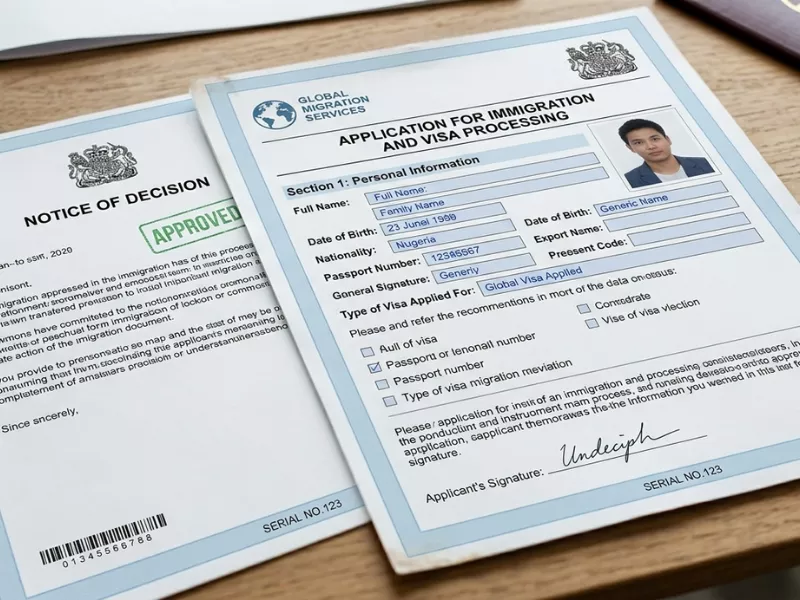
Immigration law firms deal with high-volume foreign-language documents, birth certificates, marriage certificates, police clearance, etc. USCIS needs certified translations for all documents not originally in English.
Why professional translation is non-negotiable here:
- The USCIS translation checklist does not accept machine translations; all translations must include the translator’s certification.
- Errors in immigration documents can result in application denials or deportation.
For immigration attorneys working with certified legal translators, ensure compliance and reduce the risk of USCIS rejection.
5. Power of Attorney and Notarized Documents
Power of attorney documents give authority to one person to act on another’s behalf in legal and financial matters. When these documents cross borders, they don’t just need translation; they need notarized translation, or apostille authentication in the target country.
6. Regulatory and Compliance Documents

Global law firms that cater to multinational clients should check regulatory submissions. What makes regulatory translation important:
- Regulatory bodies in the US and abroad have specific terminology needs.
- Errors can trigger audits, penalties, or loss of operating license
Law firms with an international compliance practice should partner with legal translation experts who understand both the regulatory scenario and legal framework.
7. Corporate and M&A Due Diligence Documents
In cross-border mergers and acquisitions, there is due diligence of hundreds of documents in multiple languages. The speed and volume needs can attract firms towards AI-only solutions.
What Is AI vs Human Translation for Legal Documents?
AI vs human translation includes one question: can automated tools replace real experts when converting legal texts from one language to another while preserving their full legal meaning and jurisdiction accuracy? It’s not a general translation; it needs translators who are trained in both linguistics and law.
AI is evolving in every aspect, but when it comes to translation, it still can’t match the expertise of a human translator. However, a human translator must be certified by a recognized authority.
A certified legal translator must understand:

The professional services provide expertise with certified translators, proper documentation, and accountability for accuracy where AI fails. Machine translation post-editing is an effective process for translations.
Why AI Translation Falls Short in Legal Contexts?
AI-powered tools like ChatGPT or DeepL have significantly changed the translation accuracy, but legal translation is different. When comparing legal translation accuracy AI vs Human performance, the gap is huge. Here are the limitations of AI in legal translation:
| AI Limitation | Real-world Impact on Law Firms |
| Jurisdiction blindness | AI cannot differentiate between trust in US common law and civil law, which produces inaccurate translations |
| No cultural and legal context | Terms like force majeure have jurisdiction-specific meaning |
| Accuracy drops to 55% | A 55% drop in accuracy is unacceptable in courtrooms, contracts, etc. |
| AI hallucinations | AI tools give wrong case laws with incorrect language |
| Confidentiality risks | AI tools do not meet NDA and confidentiality standards. |
| No certification | Courts and regulatory authorities need certified translations. AI cannot produce documents with legal certification. |
Why Law Firms Need Human Translators?
Managing the translation across the jurisdiction needs more than a vendor. It needs a structured, compliant, and scalable system. Leading US law firms use the following best practice:
- Certified translation services
- Assigning subject matter experts
- Establish NDA protected workflows
- Implement quality review layers
- Centralize terminology management
- Plan for apostille requirement
Taken together, these practices reflect a broader truth: in legal work, translation is not a commodity task. It is a professional discipline that carries the same stakes as the legal work it supports.
Human Vs AI Legal Translation: A Direct Comparison
The debate about human vs AI legal translation is not about preference; it is about fitness for purpose. Here is how the two approaches compare:
| Criteria | Human Translator | AI |
| Legal Accuracy | High | 55% |
| Jurisdictional details | Yes, they are trained in the target legal system | No, it applies generic definitions |
| Certification | Yes, ATA-certified or sworn translators | No, it cannot produce a certified document |
| Confidentiality | Yes, NDA, secure workflows | Consumer tools lack required protections |
| Speed | Moderate, can be fast with volume teams | Instant |
| Cost | Higher reflects legal expertise | Low or free |
| Court Acceptance | Yes | No |
| Best Used For | All binding legal documents | Internal drafts, background research |
What Does Certified Translation for Law Firms Cost, and Is It Worth It?
Document translation services are priced based on the complexity, language pair, volume, and turnaround time required. While costs change by provider, here is a general range for U.S.-based law firms:

The cost of a professional translation is nothing compared to the potential costs of an error, a voided contract, a failed regulatory submission, a lost arbitration, or a malpractice claim. For law firms, this is risk management, not just a service fee.
Conclusion
Rush Translation Services specializes in translation services for law firms across the U.S. Our certified translators are experienced in contracts, immigration filings, patents, court documents, and M&A materials across 100+ language pairs.
Frequently Asked Questions
Q1. What types of legal documents require professional translation?
Contracts, patents, court filings, immigration documents, powers of attorney, regulatory submissions, and M&A due diligence materials all require professional legal translation. Any document with legal consequences, submitted to a court, government agency, or counterparty in a foreign language, should be translated by a certified legal translator, not an AI tool.
Q2. Why can't AI tools like ChatGPT or DeepL replace certified legal translators?
AI tools lack jurisdictional understanding, cannot produce certified translations, carry confidentiality risks, and achieve only 55–60% accuracy for specialized legal terminology. In legal contexts, an error rate of 40–45% is not acceptable. Certified translators bring legal training, subject-matter expertise, professional accountability, and the ability to certify their work for court and government acceptance.
Q3. What is the difference between certified and notarized legal translation?
A certified translation includes a signed statement from the translator affirming the accuracy of the translation, required by USCIS and most U.S. courts. A notarized translation goes one step further, with a notary public witnessing and authenticating the translator’s signature. Notarized translations are often required for use in foreign jurisdictions or for apostille authentication.

