 info@rushtranslationservices.com
 +1-559-742-0021
To translate a foreign birth certificate for a green card application, you have to submit the original government-issued documents along with a complete translation. The translation should have all the elements, including the title, name, date, and a signed statement confirming the identity of the translator.
With green card denials approaching 50,000 this year, document errors remain the most common and avoidable reasons why people fail.
This guide walks you through everything you need to know about translation for a green card application, what USCIS requires, how to get it done correctly, and what to do when complications arise.
Key Takeaways
- USCIS, the embassy, or consulate needs a certified English translation of every foreign birth certificate.
- The translator must certify that they are competent to give accurate and complete translations.
- You should provide the original foreign birth certificate along with the certified translations.
- If your country never issued a birth certificate, USCIS accepts secondary evidence in its place.
- Using a professional translations services reduce the risk of costly errors and application delays.
Why USCIS Requires a Foreign Birth Certificate Translation?
USCIS officers review thousands of applications and can only work with documents in English. A foreign birth certificate that is submitted without a certified translation will not be accepted, no matter how clear or legible the original document is.
According to USCIS regulations, every document in a foreign language should have an English translation. The translator should certify that they are competent in both languages and that the translation is accurate and complete. The core reason for this is simple: it creates legal accountability, provides consistency, and helps in fraud prevention.
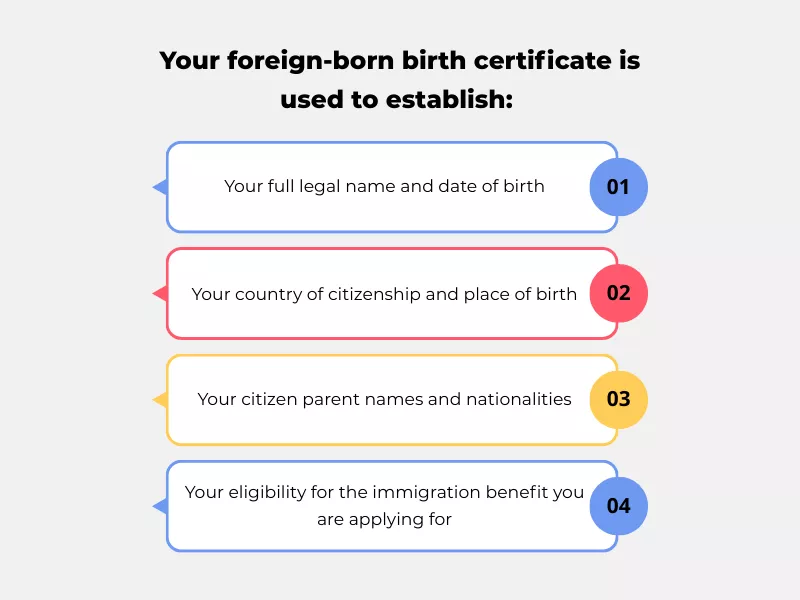
Your foreign born birth certificate is used to establish:
What Qualifies as a Foreign Birth Certificate?
A foreign birth certificate is any official government-issued document that records a person’s birth in a country outside the United States. A foreign birth certificate is any official government-issued document that records a person’s birth in a country outside the United States.
No matter what it is called in your country, if it serves as the official record of your birth issued by a government authority, it qualifies as a foreign birth certificate for USCIS purposes.
Note: An original foreign birth registration certificate is different from a hospital-issued birth record. USCIS translation checklist generally requires the government-issued civil registration document, not hospital records.
USCIS Requirements for Foreign Birth Certificate Translation
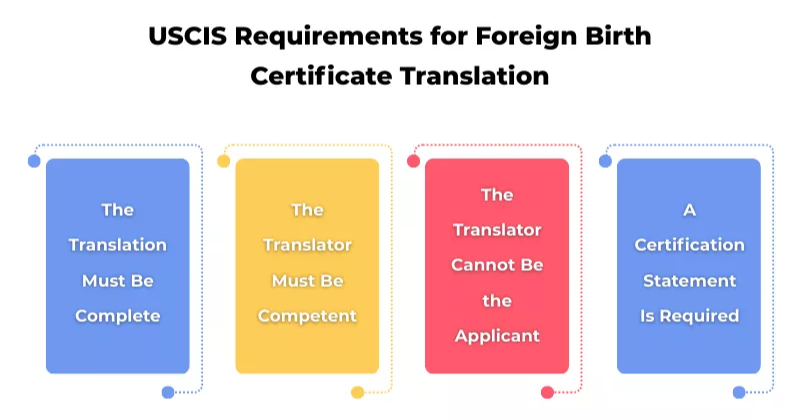
Not all translations are equal. USCIS has different rules about how a foreign birth translation should be prepared:
The Translation Must Be Complete
Every element of the original document must be translated with the help of a professional translation service, including headers, stamps, seals, annotations, and any handwritten notes. A partial translation will not be accepted.
The Translator Must Be Competent
The translator does not need to be a licensed professional, but they must certify in writing that they are competent to translate between the two languages involved. This certification statement must accompany the translation.
The Translator Cannot Be the Applicant
You cannot translate your own documents. USCIS does not allow applicants to certify their own translations, as it creates a conflict of interest.
A Certification Statement Is Required
The certified translation should include a signed statement from the translator that has:
- The translator’s full name and contact information
- A statement that confirms competence in both languages
- A declaration that the translation is accurate and complete to the best of their knowledge
- The date of the certification is when it was certified as a true copy.
How to Translate a Foreign Birth Certificate to English: Step by Step
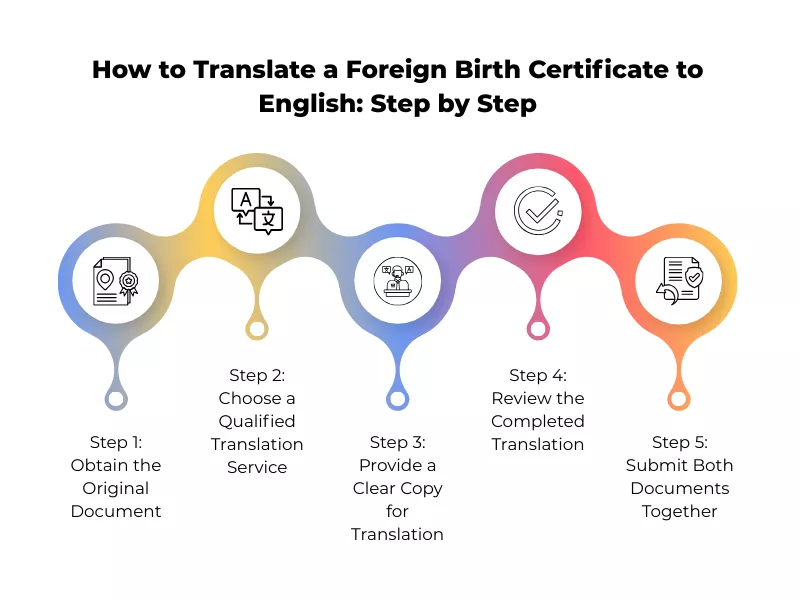
Here is a breakdown of the process to get a foreign birth certificate translated correctly for your green card application.
Step 1: Obtain the Original Document
You should submit the original birth certificate of the foreign country, not any photocopy. If you do not have the original one, then you have to contact your home country’s civil registry or vital records office to request a certified copy and a true copy of the original birth or death certificate.
Step 2: Choose a Qualified Translation Service
Select a translator who has experience in USCIS-compliant certified translations. You should look for:
- Specific experience with immigration documents
- A clear certification process that meets USCIS standards
- Turnaround time options that fit your application timeline
- A quality review process to catch errors before delivery
Hiring a professional birth certificate translation service reduces the risk of rejection. It is different from general translation tools or uncertified translators. A professional service should know exactly what USCIS needs to see.
Step 3: Provide a Clear Copy for Translation
Send a high-resolution scan or clear photograph of your original certificate of birth abroad. Every element should be legal, including stamps, seals, and handwritten entries.
Step 4: Review the Completed Translation
When you get the translation, review it carefully. Cross-check every name, date, and location of the child born abroad in the original document. Even small mistakes can raise red flags during USCIS review.
Step 5: Submit Both Documents Together
When you file your green card application, always submit the original foreign-born birth certificate along with its certified English translation. Never submit the translation alone.
What the Certified Translation Should Look Like?
A proper certified translation of a foreign birth certificate will mirror the layout of the original as closely as possible. It will include:
| Element in Original | What the Translation Should Include |
| Document title / header | Translated title and issuing authority name |
| Registrant’s name | Exact transliteration or translated name |
| Date and place of birth | Full translated date and location |
| Parents’ names and details | Complete document translation service of all parent information |
| Official stamps and seals | Description: e.g., ‘[Official Seal of Municipality]’ |
| Signatures and annotations | Noted and translated where applicable |
| Certification statement | Signed statement from the translator |
Common Problems and How to Handle Them
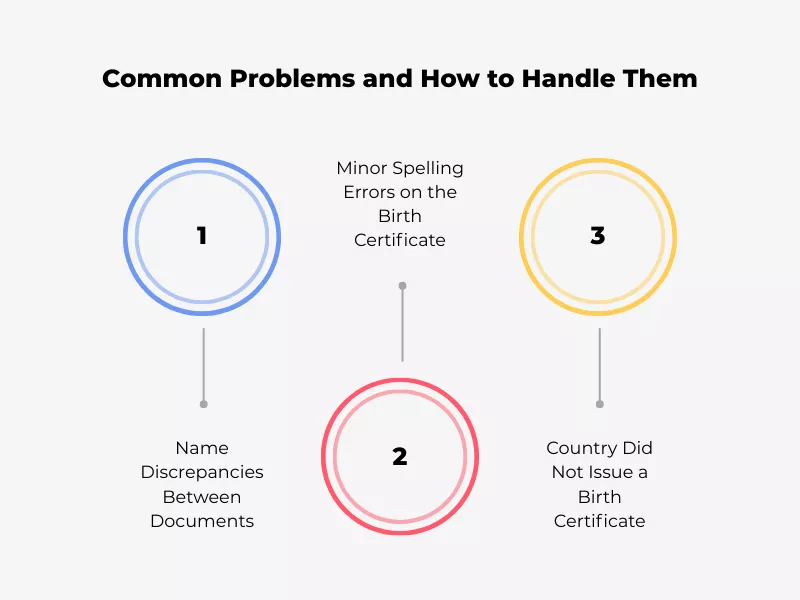
Name Discrepancies Between Documents
It is not common for applicants to find the name on their foreign birth certificate different from their passport or other identity documents. This can happen because of transliteration differences, name changes, or clerical errors over the years.
If you face this situation, you should:
- Submit a detailed explanation letter (sometimes called a “discrepancy letter”) addressing the difference
- Provide supporting documentation such as a marriage certificate, a legal name change document, photo identification, or a sworn affidavit if you were born in a foreign country.
- The immigration attorney should review the discrepancy before submission.
Do not try to alter the translation just to match your passport. The translation should accurately reflect what is on the original document.
Minor Spelling Errors on the Birth Certificate
Minor spelling errors on a foreign birth certificate are more common than people realize. It is most common in countries where clerical records are handwritten. If your birth certificate has a minor spelling error in your name, then you have these options:
- Get a correction or amendment done from the issuing civil registry in your home country.
- Submit a sworn affidavit that explains the error and confirms your identity
- Provide additional supporting documents that corroborate the correct information
The translations should show exactly what is written on the original, even if it has errors. Do not ask the translator to correct the errors in the English version.
Country Did Not Issue a Birth Certificate
Some applicants were born in countries or regions where birth registration was not common practice, or where records have been lost due to conflict, natural disasters, or administrative failures.
In these cases, USCIS accepts secondary evidence of birth. Acceptable alternatives may include:
- Baptismal records or religious birth registrations
- School enrollment records
- Hospital birth records
- Affidavits from witnesses present at the birth (e.g., a parent, midwife, or relative)
- Census records or other government records that indicate date and place of birth
If you are relying on secondary evidence, it is strongly advisable to work with an immigration attorney to ensure your documentation package is as strong as possible.
How Long Does the Translation Take?
Turnaround times vary depending on the translation provider and the complexity of the document. In general:
- Standard service: 2–5 business days
- Rush service: 24–48 hours
- Same-day service: Available from select providers for an additional fee
If you are working under a tight deadline for your green card application, always choose a service that offers expedited options and can confirm your delivery timeline upfront.
Does the Foreign Birth Certificate Ever Expire?
A foreign birth certificate itself does not have an expiration date; it is a permanent legal record of your birth. However, USCIS may have concerns about the age or condition of the document in some circumstances.
Some countries issue “new” or “updated” versions of birth certificates periodically, and immigration officers may prefer more recently issued certified copies. If your original document is very old or in poor condition, obtaining a fresh certified copy from your home country’s civil registry is worth considering before translation.
According to the U.S. Department of State, records of birth abroad are similarly treated as permanent records. The key issue is not expiration but document integrity and completeness.
Tips for a Smooth Green Card Application
Before submitting your application, run through this checklist:
- You have obtained an original foreign birth certificate
- Certified English translation is complete
- The translation include certification statement
- All names and dates are cross-checked
- The original and translation are submitted together
- The issues are addressed with supporting documents
- The application is reviewed by an immigration attorney.
Why Use a Professional Translation Service?
Getting your translation wrong can have serious consequences — from application delays to outright rejection. A professional translation service that specializes in immigration documents gives you:
- Accuracy: Every field on your birth certificate is translated completely and correctly
- USCIS compliance: Certification statements that meet current USCIS requirements
- Speed: Turnaround times designed to fit immigration deadlines
- Peace of mind: Reduced risk of costly errors that could set your application back months
Final Thoughts
Translating a foreign birth certificate for a green card application is not something you want to leave to chance. USCIS has clear requirements, and even small mistakes — a missing certification statement, an incomplete translation, or an unaddressed name discrepancy — can delay your path to permanent residency.
Take the time to get it right. Use a certified translation service with experience in immigration documents, review the translation carefully before submission, and make sure you understand how to handle any complications specific to your situation.
Your green card application is too important to risk on an inadequate translation.
Frequently Asked Questions
Q1. Does the foreign birth certificate ever expire for USCIS?
No, it is considered a permanent record and does not expire for USCIS purposes. However, if the copies of records are old, then USCIS may need a long-form certified copy.
Q2. My foreign birth certificate has a minor spelling error. What do I do?
The best approach is to submit a sworn affidavit from a parent who can explain the error.
Q3. What if my home country didn’t issue a foreign birth certificate when I was born?
You should submit a certificate of non-availability from the official government authority in that country. To fill this gap, you can submit church or baptismal records, school or hospital records.
Q4. What if the name on my foreign birth certificate is different from my Passport?
You must provide a legal paper trail that links the two names. This usually includes a marriage certificate, a court-ordered name change decree, or an adoption paper.

Want To See My Profile — Click Here Emily
- How to Translate a Foreign Birth Certificate for a Green Card Application? - March 23, 2026
- What Is the Simlish Language? A Guide to Simlish Phrases and Translations - February 23, 2026
- USCIS Translation Requirement Checklist 2026 - February 19, 2026
